

As my friend Edward Givens says, “great sounds = inspiration”. And sometimes it’s true. Thus came “O I C U”.
Any morning you wake up to new Stan Stewart music is a good day. That day is tomorrow, but still ☺️
— John M Davis (@jdsampo.bsky.social) November 10, 2025 at 9:16 AM
[image or embed]
Apologies to my non-gearhead readers. This may not be the most interesting blog post for you.
O’s Ahead
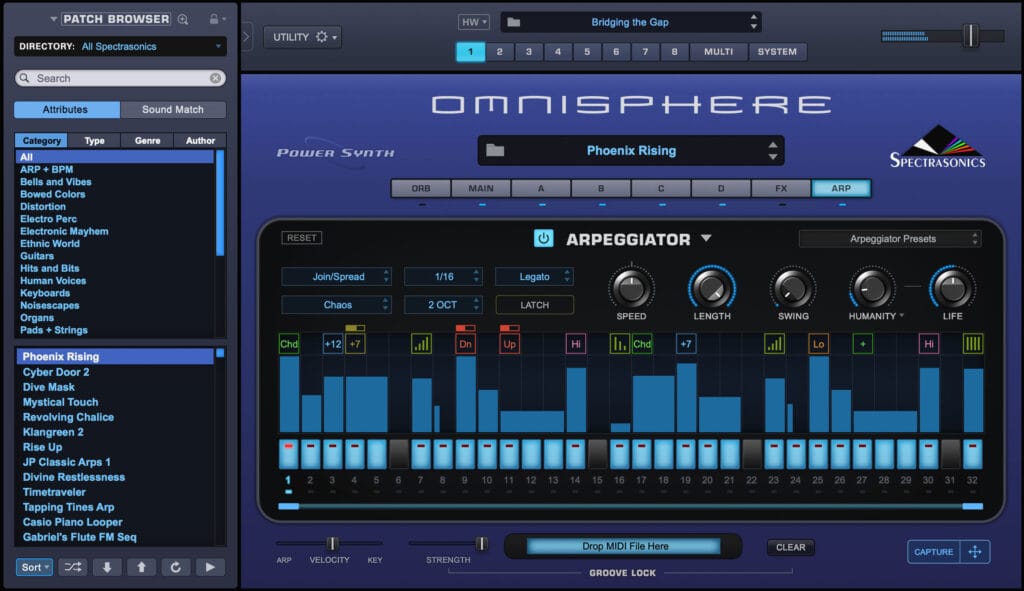
John M Davis commented when I posted about the release of version 3 of Omnisphere. (I’ll sometimes refer to it as “O3”.) I’ve been licensing and using this software synthesizer since version 1. Each upgrade has been interesting. Certainly going from version 2 to 3 was not the giant leap of upgrading from version 1 to 2. Still, there are features in this upgrade from Spectrasonics that make it interesting.
I may be fooling myself, but it seemed like some of the patches I had created in the previous model of Omnisphere sound better in the new one. Add to this the long list of new or updated types of synthesis and effects (everything from EQ to powerful modulation) and you have a winner. Plus, the effects now may be used on any track. They are no longer limited to being used inside of O3.
In response to John, I posted a thread of replies. After writing those, it occurred to me that the best way to explore Omnisphere 3 would be to create music with it.
O, but…
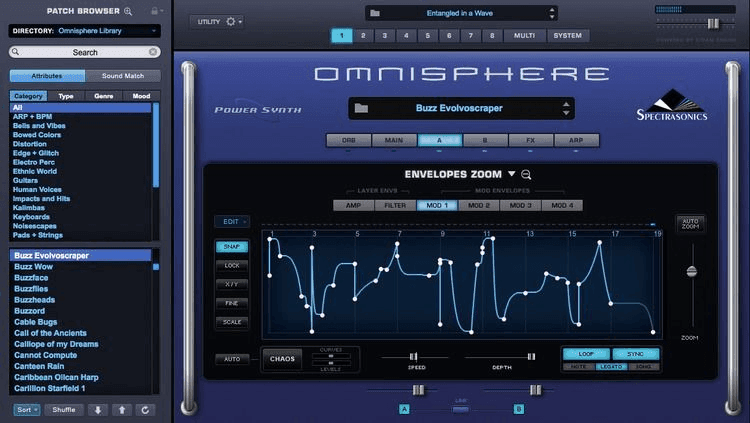
I’m not going to list everything updated feature or every perk of the upgrade. But I will tell you that this synthesizer is feature rich. Besides one of the finest arpeggiators I’ve experienced and a huge barrage of sampled sounds, it has a multitude of synthesis, filters, and tweaks. Visit the Spectrasonics website to read those lists.
To make this project even more challenging, I’m trying to move my DAW from Avid Protools to Apple Logic Pro. (Yes, I know I’ll hear from my friends who use Reaper. I really did try it. I just could not get the hang of its workflow.) After decades as a Protools user, Logic is proving to be a steeper learning curve than I imagined. It simply does not have the same “logic” that I’ve gotten used to.
But I was committed. And so, you get what you get. This may not be my best work, but it was fun. Oh, and did I mention I completed all four tracks in a week? That’s correct: composed, performed, arranged, tweaked, mixed, mastered, created cover art (not to mention this blog post), and uploaded in less than 7 days.
The Omnisphere Rundown
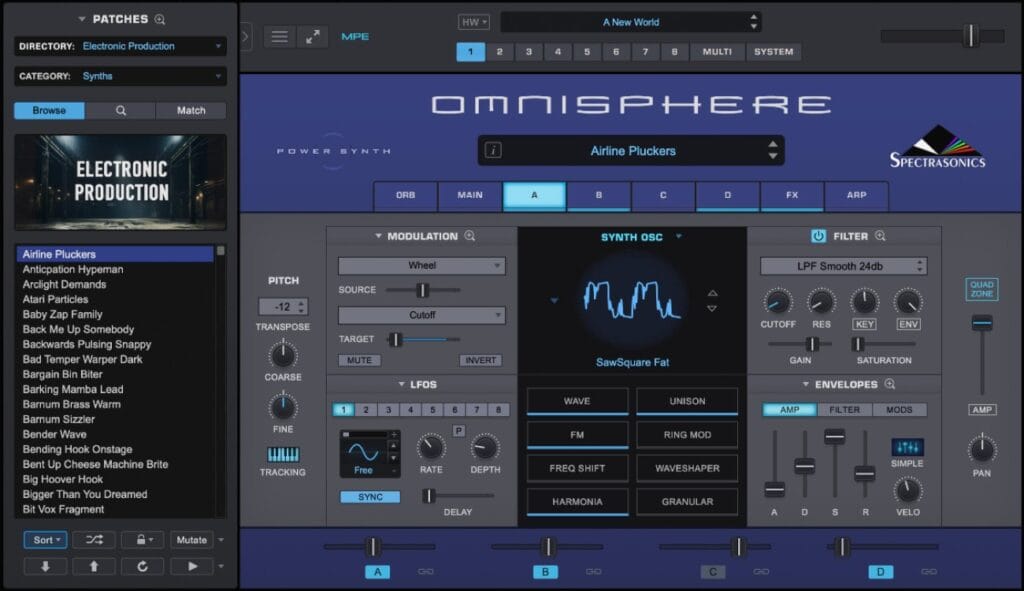
Each of the four tracks has a single instance of Omnisphere 3 I used to create the sounds on these songs. That means I was able to have (up to) eight sounds (since the instrument is 8-part multi-timbral). I limited myself to certain patch categories: “Cussed Um” is all patches created by me (custom, get it?); “O U R” is limited to factory patches from the new release; and “Celestial Cradle” is all 3rd-party (not from Spectrasonics) patches.
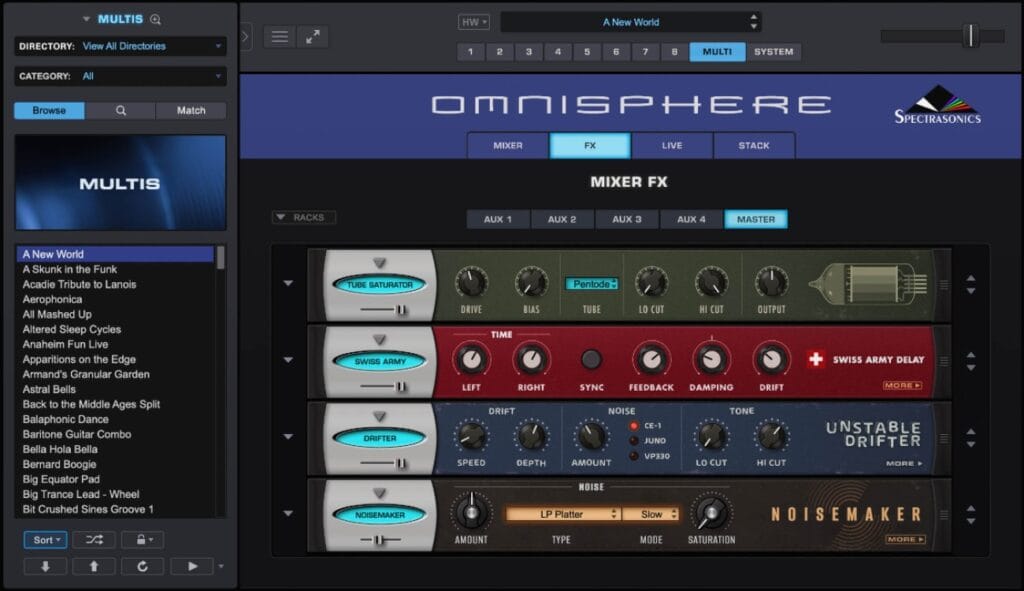
The only non-Omnisphere effect I used was the iZotope 12 Maximizer. I could not find a limiter in the O3 FX array that provided mastering-level features. All other effects ranging from EQ to sound-field-imaging to reverb were a pleasure to use both within O3 and externally.
It’s true. Sounds can inspire. I found it easy to compose these pieces of music. And now you get to decide if they are decent or just a fun experiment. (I’m good either way.) Thanks for listening.
More Tech-Head Stuff
What’s Omnisphere 3 good for? Almost any style of music. But I think ambient, chillwave, experimental, EDM, and trance are some that are easy to pull from it. For other genres, you may have to do some tweaking of your own.
Any criticisms? Not anything major. A few patches had phase cancellation within certain pitch ranges. I found ways to adapt those using the built-in Imager effect.
Do I recommend O3? I certainly do. As I explored things, I discovered that version 2 was included in nearly half of my previous releases. I doubt that I’ll repeat an O3-only release, but it will certainly be a major player in my sounds for music-making.
Discover more from Stan Stewart - @muz4now
Subscribe to get the latest posts sent to your email.